
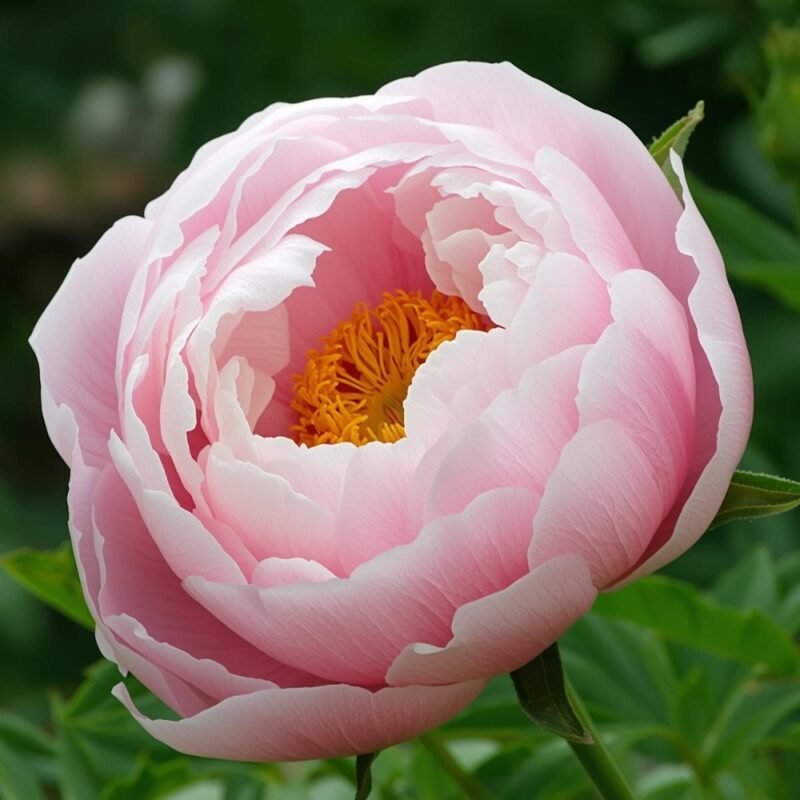
A peony (Paeonia spp.) is a herbaceous perennial, shrubby, or intersectional hybrid plant in the family Paeoniaceae, native primarily to Europe, Asia, and western North America, distinguished by its lush, compound leaves and large, globular, often fragrant flowers borne in late spring to early summer. These showy blooms, with 5–10 broad petals surrounding numerous stamens and a central disc, symbolize prosperity, honor, and romance, making peonies highly sought after in gardens, weddings, and the cut-flower trade.
Botanical Characteristics
Peonies grow from thick, carrot-shaped roots or rootstocks, producing stout stems 50–150 cm tall clad in alternate, deeply lobed or divided leaves (ternately compound, 9–70 leaflets). Flowers are 8–25 cm across, radially symmetrical, with 5 sepals, 5–10 petals (honeycomb-textured in some), 50–160 free stamens, and 2–5 carpels enveloped at the base by a fleshy disc; fruits are dehiscent follicles releasing black seeds.
- Flower forms: Singles (one row petals), Japanese/anemone (petaloid stamens), semi-double/double (extra petal rows), bomb (globular centers). Colours range from white, pink, rose, coral, to red and rare yellows; fragrance varies from sweet to spicy.
- Growth habit: Herbaceous types die back annually; tree peonies (P. suffruticosa) form woody shrubs to 2 m; Itoh hybrids combine traits for hardiness.
Taxonomy and Classification
The genus Paeonia encompasses about 30–40 species divided into two subgenera: Moutan (woody shrubs, e.g., tree peonies from China) and Paeonia (herbaceous, e.g., P. lactiflora, P. officinalis). Sections like Onaepia (North American), Albiflorae, and Corallinae reflect leaf segmentation and geography; thousands of cultivars result from centuries of Chinese and European breeding.
Cultivation Practices
Peonies demand full sun, fertile, well-drained, neutral to slightly alkaline soil (pH 6.5–7.5), and minimal disturbance once established, with planting in autumn for root development. Hardy in zones 3–8, they require 3–5 years to mature for flowering; avoid deep planting (eyes 2–5 cm below soil).
- Maintenance: Divide every 10–15 years; support heavy blooms; ants aid bud opening but are harmless; pests include botrytis blight, Japanese beetles—treat with fungicides/organics.
- Challenges: Poor drainage causes rot; shade reduces blooms.
Floristry and Economic Uses
Peonies are premium cut flowers (vase life 5–10 days if conditioned cool), dominating bridal work for lush texture; Netherlands and U.S. lead production. Roots yield traditional Chinese medicine (peony bark for pain relief); ornamental value drives $100M+ global market.
Cultural and Symbolic Significance
Ancient Chinese “flowers of riches” feature in imperial gardens and festivals; Western Victorians prized doubles for shame, singles for health. Modern associations emphasize romance and good fortune, with festivals in U.S./Europe celebrating peak bloom.


What is the best flower delivery company in the UK?
Flowers can make any occasion memorable. They show care, love, or sympathy without words. Finding the best flower delivery company in the UK is not
Rainbow Tulip Bouquet – A Vibrant Gift for Every Special Occasion (Next Day UK Delivery Available)
Looking for the perfect way to brighten someone’s day? Our Rainbow Tulip Bouquet is a stunning and joyful arrangement that makes an unforgettable gift for
Purple and White Flower Bouquet – A Timeless Gift for Every Occasion Next-Day UK Delivery
Looking for a meaningful gift that speaks volumes without saying a word? Our Purple and White Flower Bouquet is a stunning arrangement that combines elegance,


